Waikato Intercultural Fund Newsletter Issue One
Published on 14 October, 2026
Nau Mai, Haere Mai!
Welcome to the inaugural issue of the Waikato Intercultural Fund Newsletter!
This is a platform for thought leadership on interculturalism and the related topics of social cohesion, diversity and anti-racism, and is intended to complement our ‘Whiria Te Tangata-Connecting Communities’ speaker events and our grant-making to relevant groups and projects.
You’re receiving this newsletter because you’re on the WIF mailing list, which has previously only been used for our event invites. We’re aiming for it to be a ‘quarterly’, with the next issue to come out in February and then every three months. You can of course unsubscribe at any time via the link down the bottom below.
Or if you like what we have to say and want to help us reach more people, tell your friends and colleagues to subscribe at momentumwaikato.nz/newsletter. Plus suggestions for future articles by you or us are most welcome.
We hope you find this and future issues thought provoking and usefully inspirational.
> The Waikato Intercultural Fund Committee.
Introducing the Waikato Intercultural Fund committee
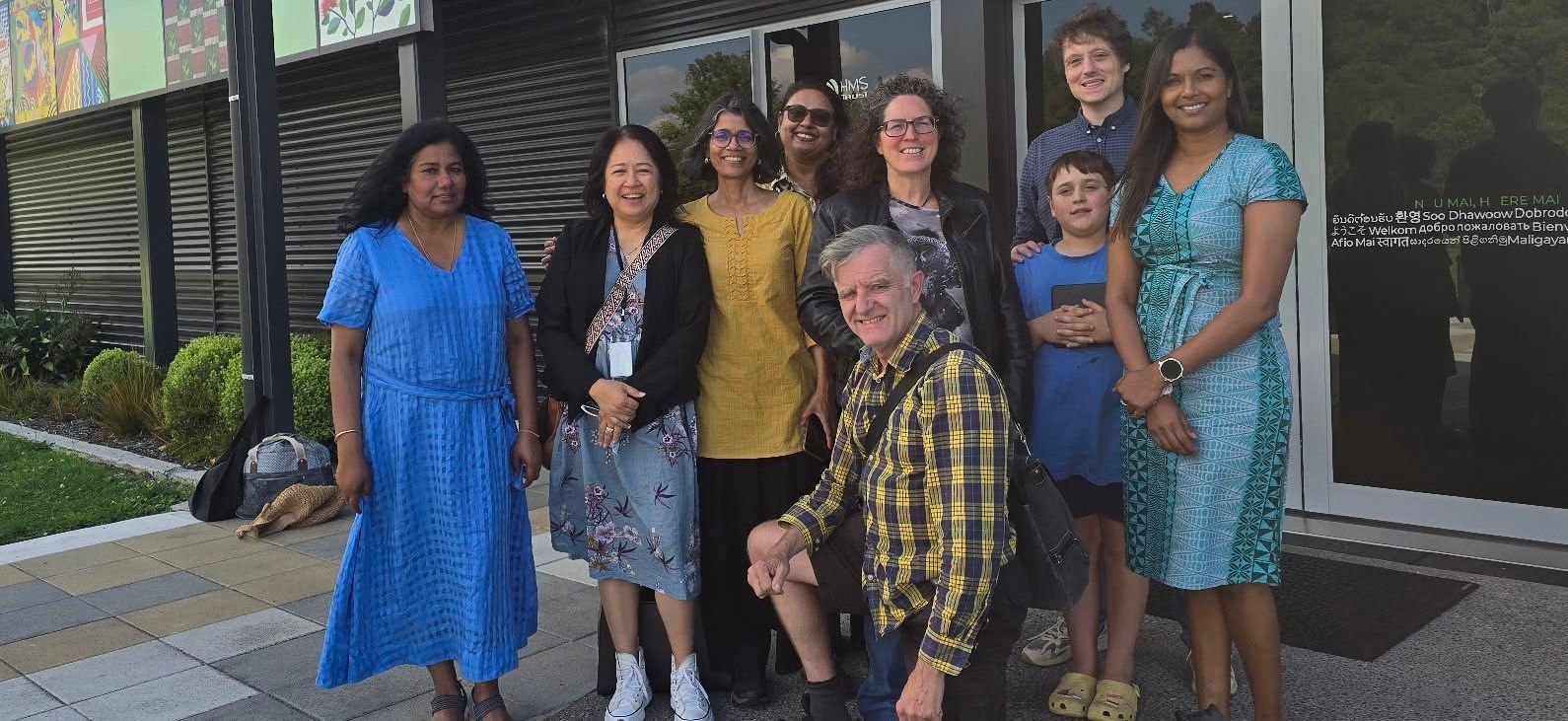
ABOVE: The Waikato Intercultural Fund committee - Vanisri Mills, Jovi Abellanosa, Priya Kurian, Ninitha Koya, Mark Servian, Holly Snape, Antoine Gilbert-Saad (and son), and Jenny Nand.
Building an intercultural Waikato where every community belongs
The Waikato Intercultural Fund committee (WIFC) was born from a moment that reshaped Aotearoa.
In the aftermath of the 15 March 2019 terrorist attack in Christchurch, Momentum Waikato recognised the urgent need for long-term, community-led action to strengthen social cohesion and deepen intercultural understanding.
From this reflection came a commitment: that the tragedy of 15 March would not define us, but instead inspire a future where everyone in the Waikato, regardless of their background, feels safe, valued, and connected.
Today, the Waikato Intercultural Fund sits under the umbrella of the Momentum Waikato Community Foundation and is guided by a dedicated volunteer committee.
Together, we bring donors, community leaders, and advocates into a shared vision for a more inclusive region, one where interculturalism is not just an aspiration, but a lived practice.
Why terminology matters
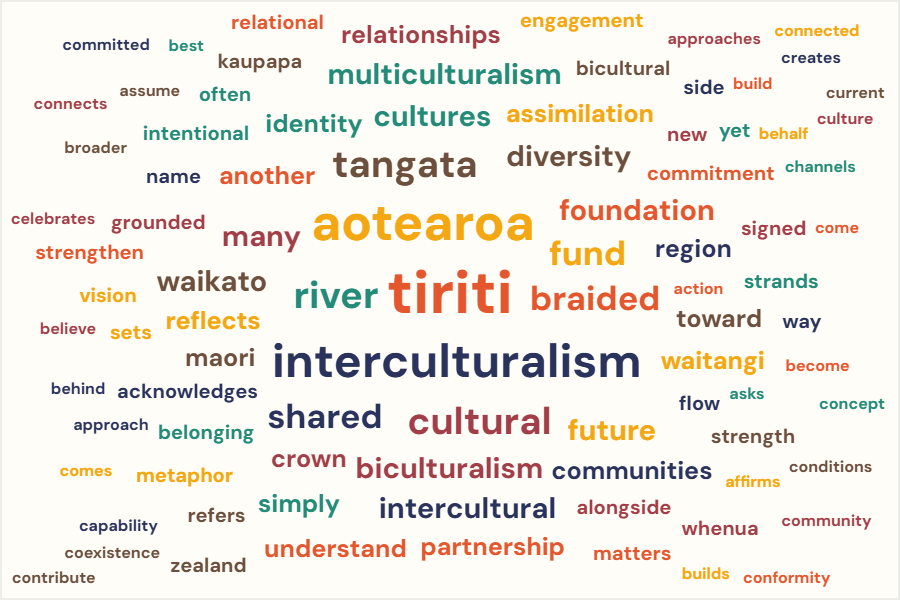
Language shapes how we understand identity, belonging, and partnership in Aotearoa New Zealand. Our name, the Waikato Intercultural Fund, is intentional.
It reflects the future we are working toward: one grounded in Te Tiriti o Waitangi, enriched by cultural diversity, and committed to relationships that strengthen communities.
To explain why this matters, it helps to understand the different approaches to cultural engagement in Aotearoa, and why interculturalism best reflects our kaupapa.
Partnering for an intercultural Waikato

By Associate Professor Justine Kingsbury, Head of Te Rākau Kotahi School of Law, Politics, and Philosophy, The University of Waikato.
I am pleased to contribute to the first newsletter of the Waikato Intercultural Fund (WIF). WIF and Te Rākau Kotahi School of Law, Politics, and Philosophy have co-hosted two events in the Whiria Te Tangata: Weaving Communities Together speaker series, and I hope to continue this collaboration. We have a shared commitment to strengthening social cohesion, deepening intercultural understanding, and supporting communities to navigate the complexities of identity, belonging, and justice.
As a School grounded in critical inquiry, civic engagement, and Te Tiriti‑led practice, we recognise that Universities have a responsibility to create spaces where difficult questions can be explored with honesty, rigour, and compassion. Partnering with WIF – particularly through the Whiria Te Tangata series – enables us to extend this mission beyond the classroom and into the community. The School recognises WIF as a strategic partner in this work, and we are proud to walk alongside this kaupapa.
Grounded in Te Tiriti, strengthened by diversity: An intercultural future for Aotearoa
By Jenny Nand.
Aotearoa New Zealand is experiencing one of the most significant demographic shifts in its modern history. This transformation will reshape our economy, workforce, communities and a sense of who we are as a nation for generations to come.
As highlighted by the NZ Institute of Economic Research (NZIER), an ageing population is no longer a future challenge. It is a structural reality already affecting labour supply, productivity, economic growth, and the sustainability of public services. Within the next few decades, approximately one in four New Zealanders will be aged 65 or older. At the same time, the future workforce, taxpayer base and population growth of Aotearoa will be increasingly driven by Māori, Pacific and Asian/ethnic communities, and by ongoing migration.
The implications are profound. Without the demographic dividend provided by younger Māori, Pacific, Asian and other migrants, Aotearoa would face severe workforce shortages, reduced economic competitiveness and growing fiscal pressure as a greying society requires greater investment in healthcare, pensions and social support.
Rather than fearing these changes, we should recognise them for what they are and consider them as a significant opportunity.