Grounded in Te Tiriti, Strengthened by Diversity: An Intercultural Future for Aotearoa
Published on 6 October, 2026
By Jenny Nand, for the Waikato Intercultural Fund team.
Aotearoa New Zealand is experiencing one of the most significant demographic shifts in its modern history. This transformation will reshape our economy, workforce, communities and a sense of who we are as a nation for generations to come.
As highlighted by the NZ Institute of Economic Research (NZIER), an ageing population is no longer a future challenge. It is a structural reality already affecting labour supply, productivity, economic growth, and the sustainability of public services. Within the next few decades, approximately one in four New Zealanders will be aged 65 or older. At the same time, the future workforce, taxpayer base and population growth of Aotearoa will be increasingly driven by Māori, Pacific and Asian/ethnic communities, and by ongoing migration.
The implications are profound. Without the demographic dividend provided by younger Māori, Pacific, Asian and other migrants, Aotearoa would face severe workforce shortages, reduced economic competitiveness and growing fiscal pressure as a greying society requires greater investment in healthcare, pensions and social support.
Rather than fearing these changes, we should recognise them for what they are and consider them as a significant opportunity.
Diversity is not a challenge to overcome. It is one of our country’s most valuable strategic assets. A diverse population strengthens our connections to the rest of the world, expands our cultural intelligence, offers links to global markets, fuels entrepreneurship, and drives innovation. It brings the skills, perspectives, networks, and capabilities needed to flourish in an increasingly interconnected world.
Ensuring a sustainable, equitable society and economy in Aotearoa will depend not only on attracting diverse talent, but also on ensuring that every community can fully participate, contribute and thrive.
Importantly, this conversation must also be grounded in the constitutional foundation of our nation, Te Tiriti o Waitangi. An intercultural future for Aotearoa is built upon Te Tiriti, which affirms the distinctive relationship between Māori as tangata whenua and the Crown, It provides the framework through which inclusion, participation, partnership and belonging can be realised for all who call Aotearoa home.
However, demographic diversity alone is not enough.
As the Waikato Intercultural Fund (WIF) committee, we encourage businesses, community organisations, educational institutions, and government agencies to work towards an intercultural approach in policy development, organisational practice, leadership and system design.
What does that look like in practice?
From an intercultural lens, social cohesion cannot be built through passive co-existence alone. It requires intentional connection.
An intercultural approach challenges us to design systems, services, workplaces and communities that foster engagement rather than separation. It encourages us to focus on creating environments where diversity in all its forms can flourish and where people can learn from one another.
Aotearoa’s diversity is already evident in our schools, workplaces, neighbourhoods, and communities. The critical question is whether our institutions, policies and systems are equipped to respond to it. By embracing interculturalism, underpinned by Te Tiriti o Waitangi, Aotearoa can build stronger communities, greater social trust, deeper civic participation, and a more resilient economy.
When supported by equitable institutions and meaningful engagement, diversity can strengthen innovation, resilience and social trust.
The future of Aotearoa will be shaped by the people who are growing it. Our challenge, and our opportunity, is to ensure the systems we build today reflect both the realities of our changing demographics and the enduring foundation of Te Tiriti o Waitangi. Through an intercultural lens, we can transform diversity from a demographic trend into one of Aotearoa’s critical social, cultural and economic strengths.
Putting Interculturalism into practice
Beyond progressing thought leadership on interculturalism, one of the Waikato Intercultural Fund’s core missions is to raise and invest funds with Momentum Waikato Community Foundation, and then use the Fund’s annual income to invest in community-led initiatives that build relationships across cultures and deepen engagement with Te Tiriti.
We are particularly interested in supporting projects that move beyond just celebrating diversity and instead create meaningful opportunities for people from different backgrounds to connect, learn from one another and build stronger communities together.
Two recent examples of this funding support in action are Kotahitanga Gallery and Tangata Tiriti – Treaty People.
Kotahitanga Gallery, an initiative by Creative Waikato, uses art and storytelling as a powerful vehicle for connection. The Gallery showcases diverse voices, cultures, and perspectives, creating a shared space where communities can engage with one another’s stories and experiences.
Through creativity, it fosters dialogue, understanding and a deeper appreciation of the rich cultural diversity that exists within Aotearoa. We encourage you to visit the Gallery and experience this unique expression of interculturalism in practice.
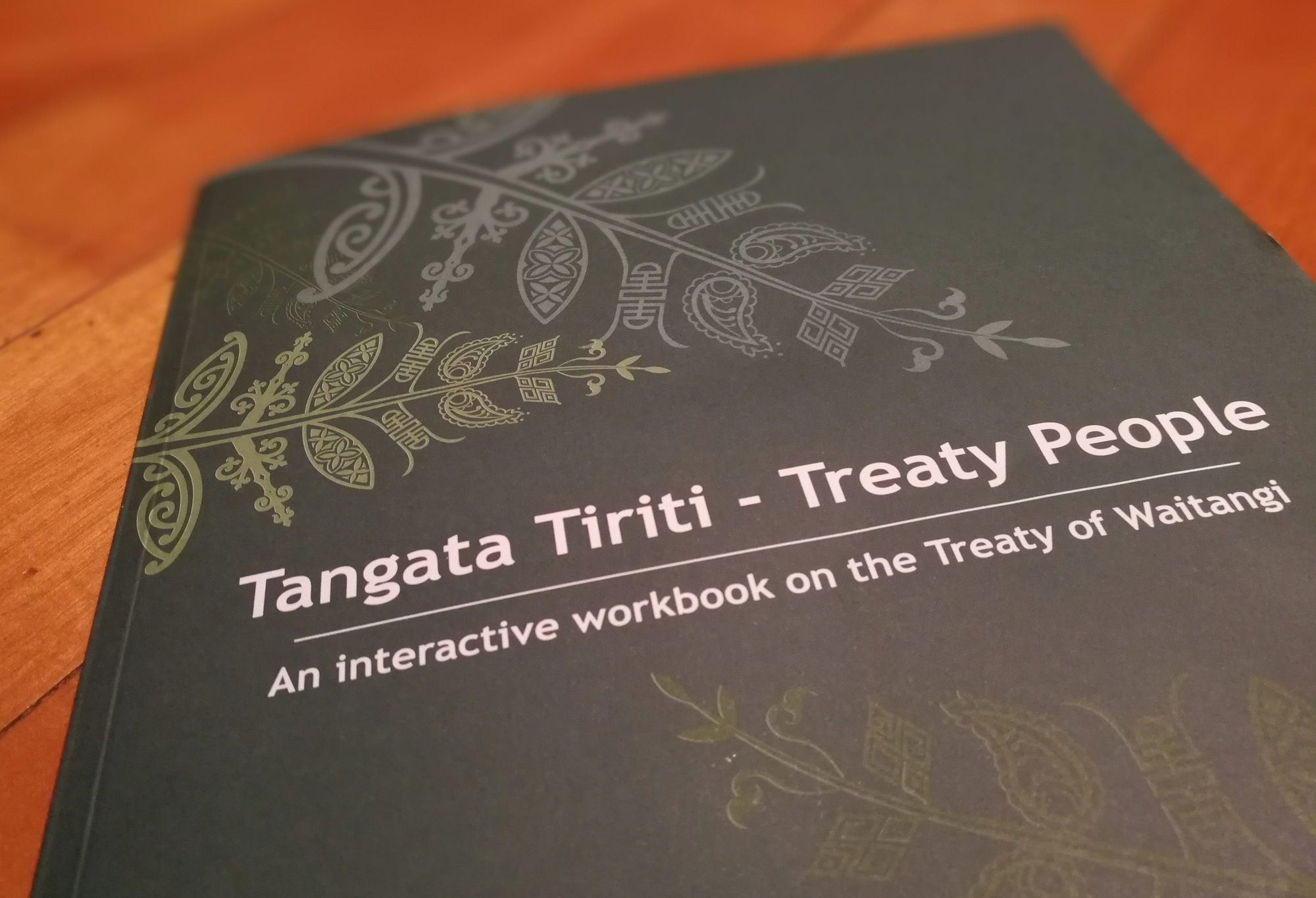
Tangata Tiriti – Treaty People takes a different but equally important approach. The initiative has developed programmes that translate Te Tiriti o Waitangi into a range of ethnic languages and trains facilitators from those communities to deliver workshops in their own languages.
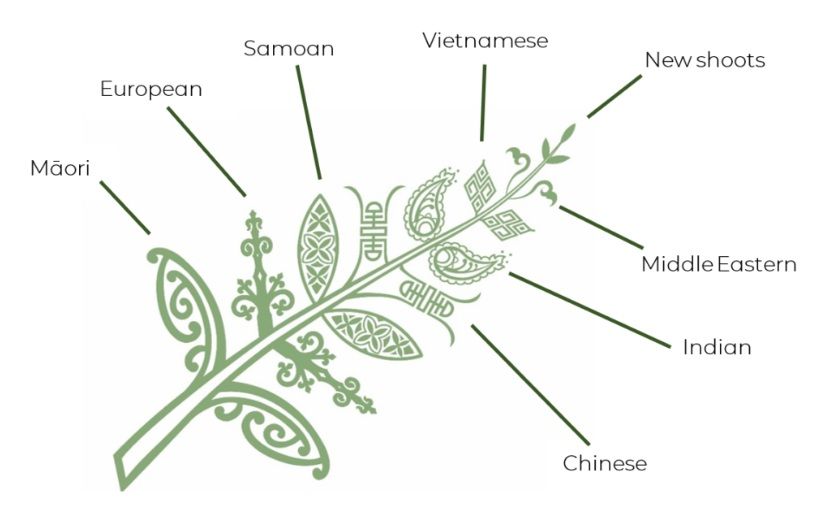
Above: The fern of Tangata Tiriti- Treaty People.
This approach makes learning about Te Tiriti o Waitangi more accessible to migrant and ethnic communities, while creating opportunities for meaningful conversations about identity, belonging, citizenship, and shared responsibility. By helping diverse communities understand the foundation of our nation, Tangata Tiriti – Treaty People is strengthening both social cohesion and intercultural understanding.
For us at WIF, interculturalism is most powerful when it is lived, not just discussed. These initiatives show two complementary dimensions of intercultural practice: creating spaces in which communities encounter one another’s experiences, and enabling diverse communities to engage meaningfully with Te Tiriti. They demonstrate how locally led projects can turn broad commitments to inclusion into sustained relationships, shared civic participation and a sense of belonging for all.