Why Terminology Matters: Introducing the Waikato Intercultural Fund
Published on 1 October, 2026
Language shapes how we understand identity, belonging, and partnership in Aotearoa New Zealand. Our name, the Waikato Intercultural Fund, is intentional.
It reflects the future we are working toward: one grounded in Te Tiriti o Waitangi, enriched by cultural diversity, and committed to relationships that strengthen communities.
To explain why this matters, it helps to understand the different approaches to cultural engagement in Aotearoa, and why interculturalism best reflects our kaupapa.
Biculturalism: Our Foundation
Aotearoa New Zealand is founded on Te Tiriti o Waitangi. Biculturalism acknowledges the constitutional and relational partnership between tangata whenua and tangata Tiriti.
Tangata whenua refers to Māori as the Indigenous people of Aotearoa.
Tangata Tiriti refers to all those who have come to Aotearoa by virtue of Te Tiriti o Waitangi, including early settlers, migrant communities, former refugees, and their descendants.
Yet tangata Tiriti is often misunderstood or overlooked. While Te Tiriti was signed by the Crown and Māori, many assume the Crown only represents Pakeha. In reality, the Crown signed Te Tiriti on behalf of all its current and future subjects. This means every community that has made Aotearoa home under the protection and promise of Te Tiriti is part of the Treaty relationship.
Recognising this broader meaning of tangata Tiriti expands our understanding of belonging. It affirms that there is a place for non-Māori in Aotearoa, grounded not in ethnicity, but in a shared commitment to uphold Te Tiriti and contribute to a just, inclusive society.
This bicultural foundation sets the conditions for how all other cultural relationships can grow, respectfully, responsibly, and in partnership.
From Multiculturalism to Interculturalism
Once biculturalism is understood, we can look at how Aotearoa engages with its many cultural communities.
Multiculturalism acknowledges diversity and celebrates the presence of many cultures. But it often stops at coexistence. Without intentional engagement, multicultural settings can become parallel societies: many cultures present, but not necessarily connected.
Assimilation, on the other hand, demands conformity to a dominant culture. History shows that assimilation weakens identity, undermines wellbeing, and creates inequitable outcomes. It has never served Aotearoa well.
This is where interculturalism offers a stronger, more future-focused approach.
Interculturalism builds on our bicultural foundation and encourages meaningful interaction between cultures. It promotes empathy, shared learning, and mutual transformation. Instead of simply living alongside one another, interculturalism asks us to build relationships that strengthen the social fabric of our region.
In short:
Biculturalism sets the foundation.
Multiculturalism recognises diversity.
Interculturalism connects us.

The Waimakariri in Canterbury is a braided river. Photo by Greg O'Beirne.
The Braided River: A Metaphor for Our Kaupapa
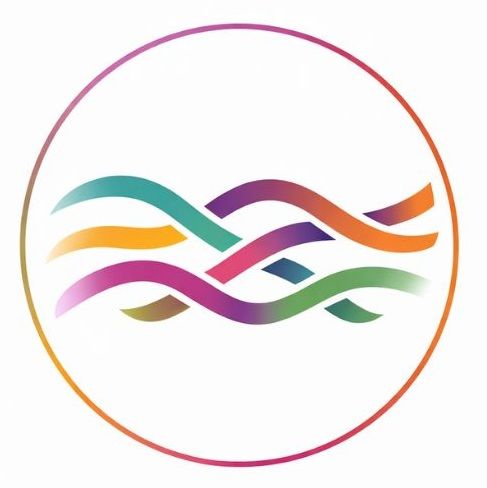
To describe this vision, we draw on the braided river metaphor, widely used by scholars and educators. In a braided river system, multiple channels flow alongside one another, weaving, separating, and rejoining as they move toward a shared destination. Each strand maintains its own integrity, yet the strength of the river comes from the way these strands interconnect.
This is interculturalism in action:
not merging into one (assimilation),
not simply sitting side-by-side (multiculturalism),
but moving, influencing, and strengthening one another while maintaining identity and direction.
The braided river reminds us that our region’s cultural currents are dynamic, relational, and interdependent. It reflects a future where cultures meet with respect, curiosity, and shared purpose.
Why We Are the Waikato Intercultural Fund
Our name signals our commitment. We are not simply a fund that supports diversity, we invest in connection, capability, and courageous conversations. We believe that interculturalism is not just a concept to understand, but a practice to live.
Like the braided river, our strength lies in the way our cultural strands flow together toward a shared horizon. That is the vision behind the Waikato Intercultural Fund, and the journey we invite our region to join.