This could be Waikato’s $120 billion legacy opportunity
Published on 17 August, 2026
Originally published by Waikato Times, Monday 17 August 2026. (Paper edition Saturday 22 August 2026).
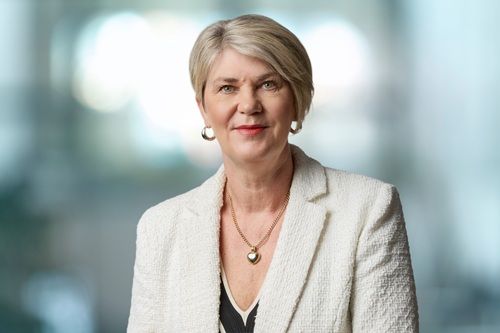
By Janice Lapwood, General Manager Endowments, Momentum Waikato.
A looming demographic transition that last week led the headlines for the first time could be an opportunity to really help the communities of the Waikato.
‘Kiwi families will soon inherit millions of dollars. Here’s what they definitely shouldn’t do’ was the most read story after it appeared atop the Stuff news site last week.
As the article declared, the demise of the “Baby Boomers” over the next two decades will spark the largest intergenerational transfer of wealth in the nation’s history.
It goes on to say $1.2 trillion of Kiwis’ private resources, most of it currently held as property, businesses, farms, KiwiSavers and investments, will be passed on as those born prior to the 1960s reach the end of their lives.
It is great this prominent Stuff headline has boosted awareness of the need for families and society to plan for this incoming surge in intergenerational wealth movement. However, it then only addressed those who may inherit a windfall, offering the “what you should not do is rush” advice given to big Lotto winners.
What wasn’t covered is what those who will pass on their “wealth” should consider doing with it, and that this could be a one-off opportunity for creating positive social change.
This chance to make real change can be realised if the act of charitable giving in Wills can become normalised for Kiwis of all ages, says Janice Lapwood.
The opportunity in this wealth transfer has been flagged for some years by financial and philanthropy commentators – here at Momentum Waikato we first raised it publicly in 2019.
This chance to make real change can be realised if the act of charitable giving in Wills can become normalised for Kiwis of all ages. Making such a “bequest” is currently relatively rare in New Zealand, and yet it is the main opportunity most people will get to give a significant financial boost to their community and society.
Right now is the time for Boomers to bequest a better world through their Wills.
Last year JBWere New Zealand, one of Momentum’s investment managers, published “The Bequest Report – Reshaping Aotearoa New Zealand by creating a legacy that goes beyond asset wealth”.
It points out that growth in the frequency and proportion of charitable giving in Kiwis’ Wills, even by a few percentage points, would be transformational for not-for-profits and the communities they support.
This is largely because the baseline here is so low - about 55 percent of all adults and about 80 percent of those over 65 have a Will, but only six percent of them include charitable gifts, compared to 10 percent in the US, and 13.7 percent in the UK.
The proportion of the total value of those Wills being charitably gifted is also low. The Bequest Report says about $320 million is currently bequeathed annually in New Zealand, an average of just 1.3 percent of those Wills’ value.
This despite the fact that bequests are particularly valuable for charities, as they take far less effort to secure than any other kind of funding.
With the number of Wills being realised set to grow as the Boomers die, any increase in the scale of the generosity they contain will grow the capacity and sustainability of the community sector.
What could this mean for the Waikato? Just under ten percent of New Zealand’s over-65 population live in the region, so if we assume that ten percent of the $1.2 trillion wealth transfer will happen here, that’s $120 billion.
If eighty percent of over-65s in the Waikato have a Will, that’s plans for $96 billion, so if 1.3 percent of that amount goes to charity, around $1.2 billion will be charitably gifted by Waikato people over the next twenty years, around $60 million a year.
A proviso is that not all charitable gifts from Wills written in the Waikato go to local groups – national charities get a big chunk, a point to which we will return.
Nevertheless, you can see how growing the proportion of bequests in Wills beyond 1.3 percent would help. Just one percentage point more would be millions of dollars more, and growing it to five or even 10 percent would be transformational.
None of this is an argument not to prioritise your family in your Will, as this all recognises that nearly everyone will leave the majority of their estate to their families.
Writing your Will is simply an opportunity to support both your family and community, because charitably gifting even a small percentage of your estate’s value will be beneficial.
If you do decide to leave a gift in your Will, it is important to discuss it with your family.
As financial advisor Katie Wesney pointed out last year in her Stuff column about the coming intergenerational transfer, there is a real need for families to talk more about inheritance, if only to avoid the sometimes-bitter disputes that can arise once the elders have died.
Advice Wesney offers on that also points to how parents and children should discuss a charitable gift in a Will – “the best-prepared families discuss values, not just valuables”.
Being community minded in your Will confirms to your family what matters to you. It tells them what causes you want them to support after you’re gone, without really reducing how much they will inherit.
Such “legacy giving” discussions can involve deep introspection and families reflecting on what is important to them.
What do you want to change in the world? What matters to you and your whānau? What does your community need to thrive? How do you want to be remembered?
For most people, having built up assets over a lifetime, using your Will to charitably gift even a minor portion of your estate is likely to be the best opportunity you will get to do something extraordinary for your community, region, country and planet.
Finally, as noted earlier, large national charities are often the major benefactor of legacy giving.
However, if you want to support your local patch and give back to the community you’ve enjoyed living in, there can be a couple of issues with only making bequests to national organisations – the money largely or entirely leaves the region, and it is most often used as a “one and done” donation and spent on operating costs or the next capital spend.
This is where the “smart giving” model of community foundations like Momentum Waikato comes in.
Using a gift in your Will to set up or add to an endowment fund at a community foundation will generate ongoing income that will perpetually fund your favourite cause or community.
The scale and therefore diversity of the community foundation’s investment portfolio, created through clubbing together such gifts and then managed by professional advisors, ensures a greater and more consistent annual return than most people’s gifts in Wills could achieve when invested alone.
September is Wills Month, the annual call to write or renew your Will. Would you consider leaving at least one percent of your estate to a charitable purpose? Before you do, definitely have a chat with Momentum Waikato about the most effective way to use your Will to create a legacy of generosity for the community and region you call home.