Modest conservation grant fills a gap in big kiwi vision
Published on 3 December, 2025
When it comes to conservation, a relatively small funding grant can sometimes be a critical element in completing a big ambition, especially if it involves New Zealand’s national bird.
The Waikato Hauraki Conservation Fund was set up at Momentum Waikato by Selwyn and Dianne June in 2021, with the express intention of being a ‘gap filler’ to pay for resources not covered by the major conservation funders.
This reflects the general reality of conservation in New Zealand, which has evolved in a patchwork fashion, as legal regimes have varied over time and place, and volunteer groups have sprung up ‘organically’ to save their local patch.
All of which both reflects and causes the often hotchpotch geographical distribution of ‘DOC’ and other conservation lands, public and private.
Conservation gap filling is therefore often about making connections, and a 2025 grant from the Waikato Hauraki Conservation Fund achieves this in many ways.
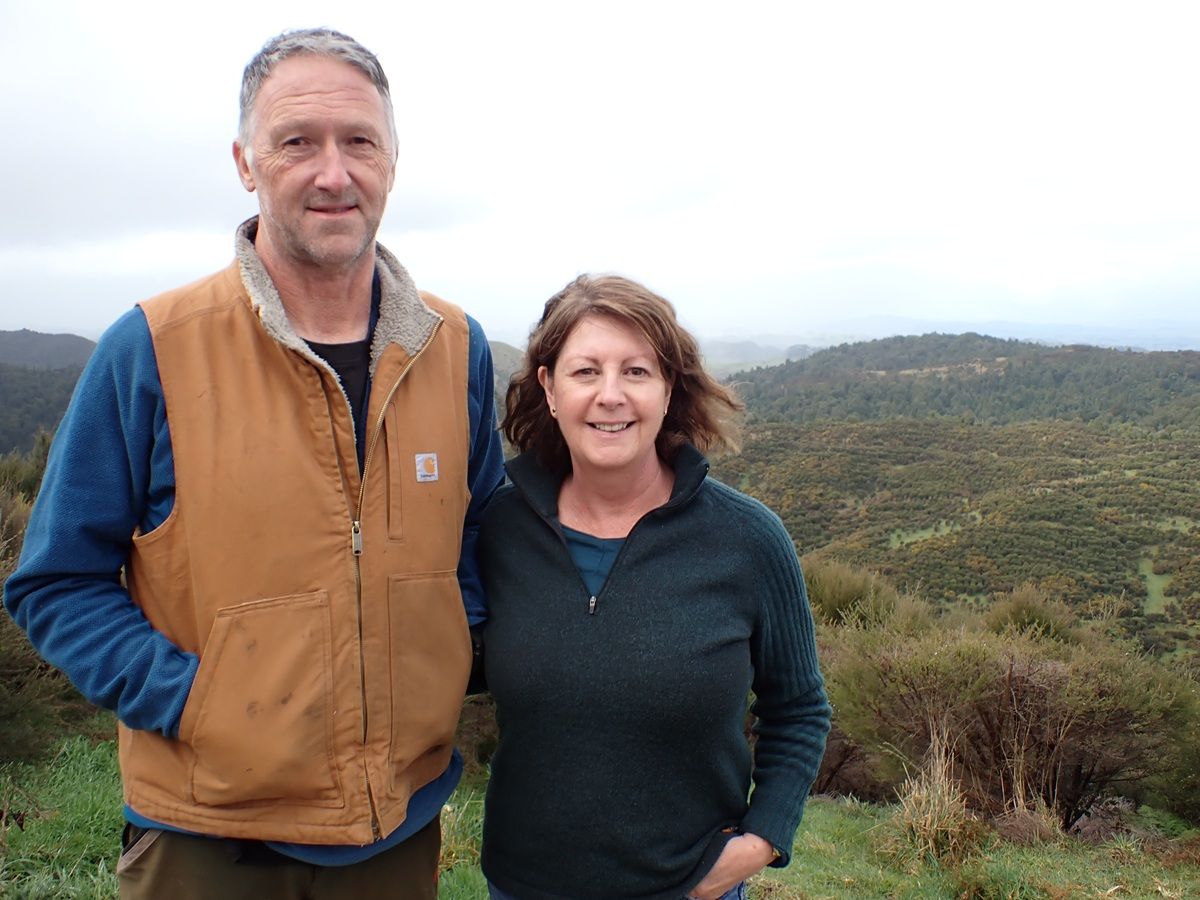 Moira and Rick Haddrell are restoring nature on the retired Mangatiti block. PHOTO: Chris Gardner / GOOD LOCAL MEDIA.
Moira and Rick Haddrell drive the Benn Road Bee Trust as the means to convert a retired sheep-and-beef hill station near Otorohanga into a manuka-honey apiary, a carbon sink, and a safe bush home for wild kiwi.
The successful couple sold premium manuka honey brand ‘Haddrells of Cambridge’ to Prolife Foods in 2015 and then bought the 470-hectare Mangatiti, which sits amongst a collection of DOC bush reserves.
They’ve spent the decade since planting manuka for the bees, and eliminating predators for the invited kiwi, supported with destocking and fencing by the Waikato River Authority, as their streams run into the Waipa.
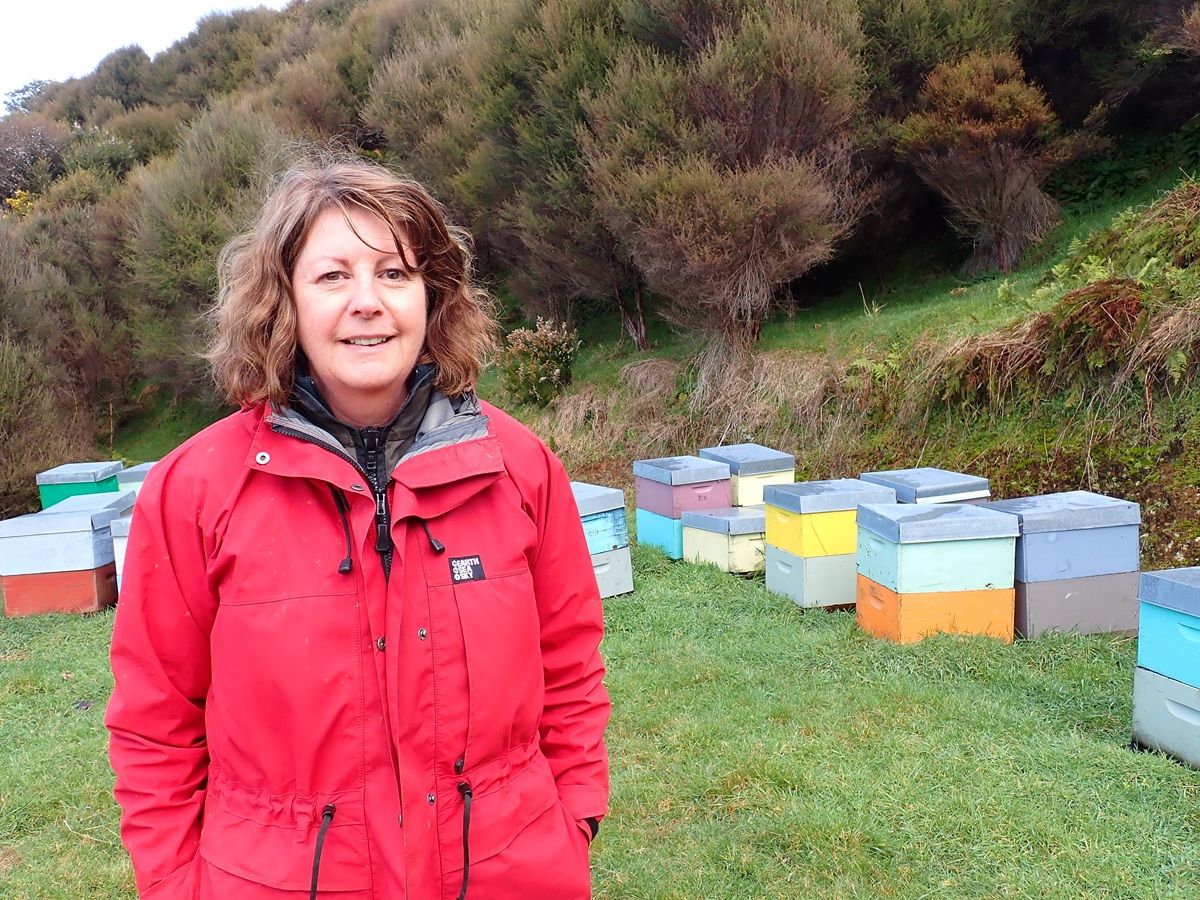
Moira with beehives at Mangatiti. PHOTO: Chris Gardner / GOOD LOCAL MEDIA.
“When we arrived, the bush on the farm was stripped out by goats, possums and pigs, and predators like weasels present, there was virtually no bird song or life,” says Moira.
“Now you can see and hear tomtits, whiteheads and kereru, and kaka over from Maungatautari.
“The re-generation of the forest floor is incredible, Before there were just patches of seedlings and it was scruffy, now growth is chest height.
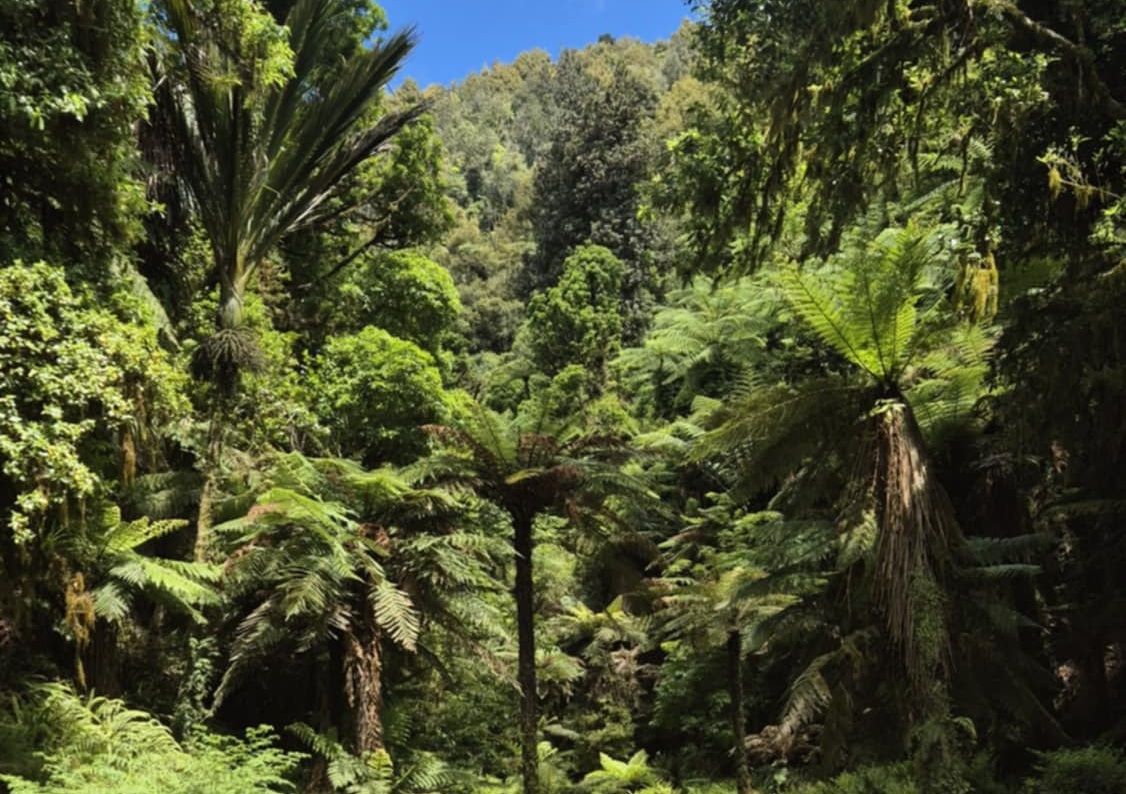 Regenerating forest at Mangatiti. PHOTO: Moira Haddrell.
“Last century trees were logged out of the bush here, so there are old logging tracks we could use to get traps in. We didn’t realise we were as smart as we turned out to be, as that track network allows two people to check and clear all 230 of our traps in one day.”
Things were not so simple for the unlogged bush in the adjacent Mangakotukutuku Conservation Reserve, one of a number of such DOC-owned bush hunting areas that sit amongst the farms across the south-west Waikato’s hills, in that typical patchwork fashion.
The Haddrells recognised they needed to fill a gap in their predator defences along their shared boundary, and it was the 70 traps now installed there that were funded by the Waikato Hauraki Conservation Fund.
“It’s steep gnarly bush, it’s a hard walk getting into those valleys,” says Moira.
“This grant from the Waikato Hauraki Conservation Fund adds to the daisy chain of traps across the area. Those 70 traps can take more than a day to check, but they ensure that the effort on our land is not in vain.”
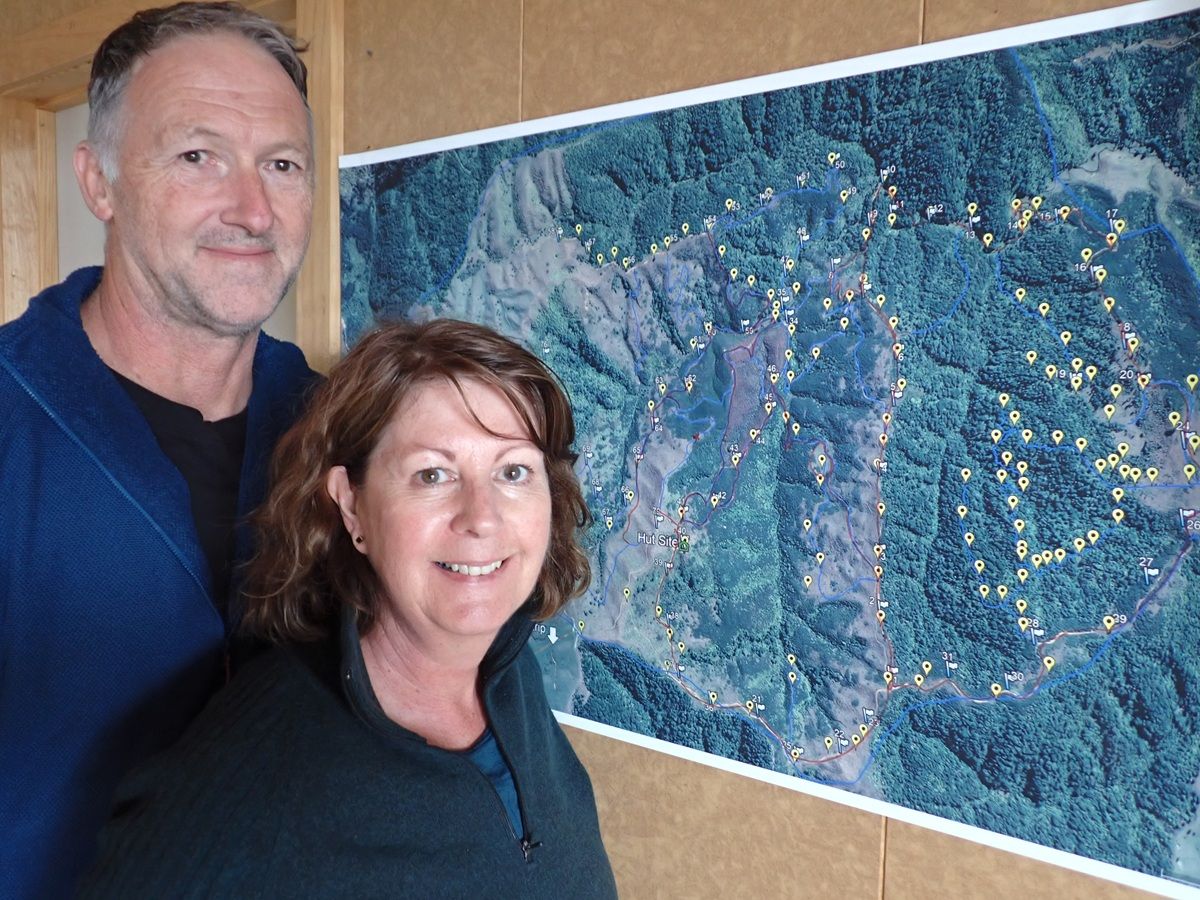 Rick and Moira with a map of their 'daisy chain' of predator traps. PHOTO: Chris Gardner / GOOD LOCAL MEDIA.
The ultimate goal of all this effort is Mangatiti becoming the “epicentre” for the large-scale return of kiwi to the Waitomo area, with 40 of the flightless birds due to be released there next April, the first contingent of up to 250 that could arrive over the next two to four years.
“The Save the Kiwi people apparently had a meeting where they confirmed that all the sanctuaries around the country are nearly full, so they laid out a map to look for places to send kiwi, and put a big circle around Waitomo. I happened to ring them the very next day,” says Moira.
The hope is that the kiwi-friendly reserve they have created will over time be connected to other parcels of public and private bush. The Haddrells’ work with their neighbours, DOC, iwi and others is seeing predators being kept at bay across a steadily larger area of the Waitomo hills.
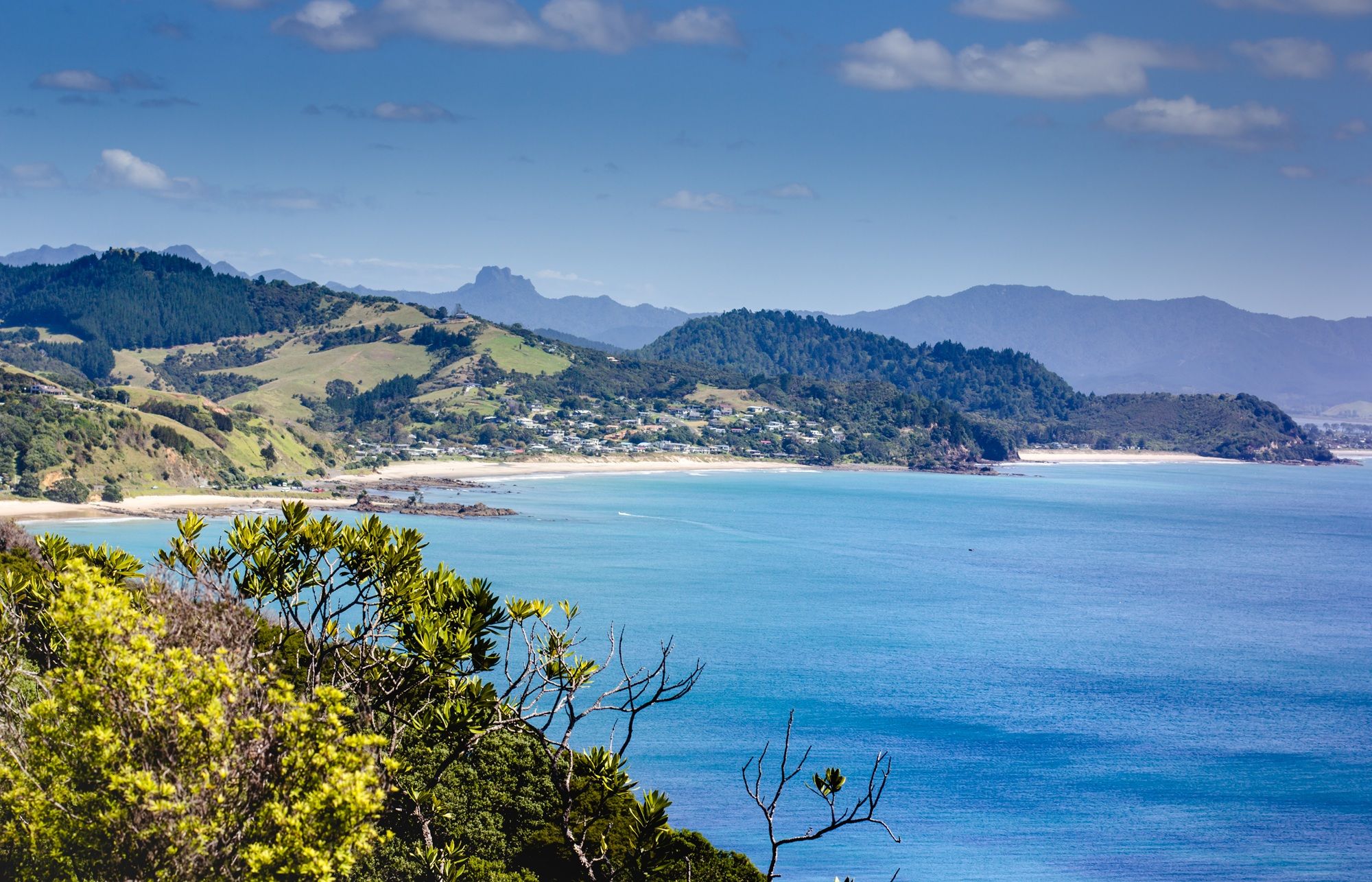
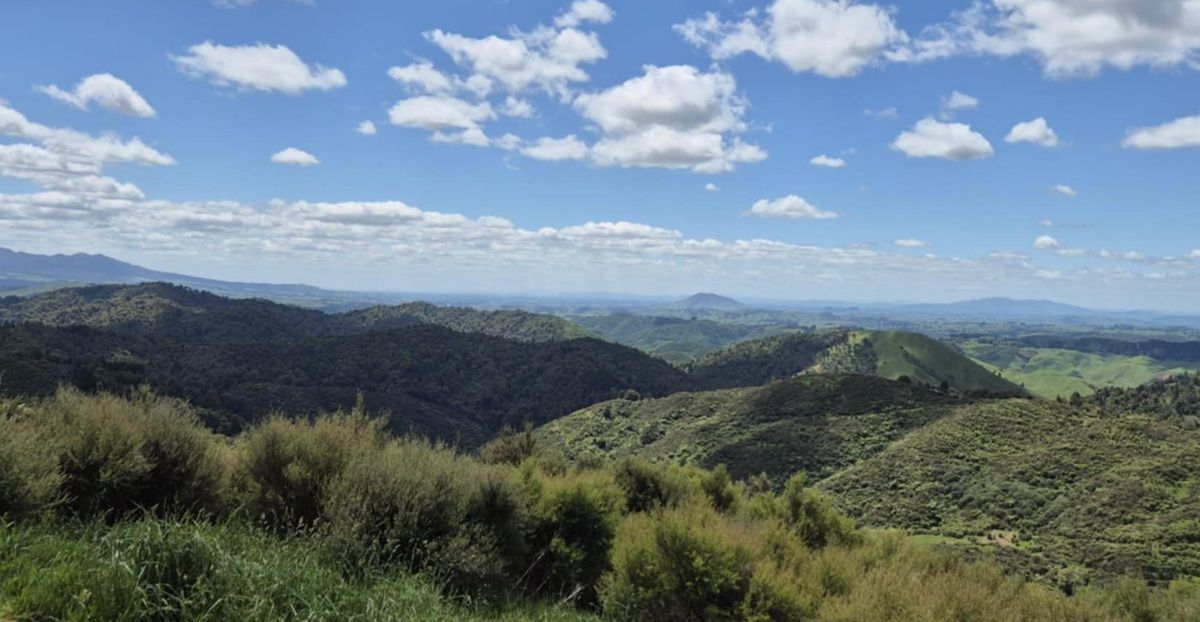 The view to the north-west from the top of Mangatiti. In the distance Pirongia is on the left, Kakapuku in the middle and Maungatautari on the right. PHOTO: Moira Haddrell.
Another priority is getting the land-owners between the bush areas to minimise risks to wandering kiwi, including giving dogs kiwi-aversion training, keeping cats inside at night, and laying out traps.
“In Waitomo, I haven’t met any farmers, neighbours or iwi that hasn’t said yes to bringing back kiwi. I thought we would get some push back to the things we were asking them to do, but they’re all on board.
“We need to spread this education because kiwi will wander. They’ve often been tracked walking up to 14km in Northland, and in Wellington one from the Makara reserve was found 25km away in Tītahi Bay,” says Moira.
“We want kiwi to roam free here, so we’re very much looking forward to their arrival.”
Thanks for all you are doing Moira and Rick, congratulations to you and the Waitomo community for your conservation efforts.
Momentum Waikato and the Waikato Hauraki Conservation Fund are proud to play a small part in realising this ambitious vision to see kiwi return to Waitomo.
If you would like to help grow and accelerate the capacity of the Waikato Hauraki Conservation Fund to provide ‘gap filling’ solutions for conservation projects across the region, you can find out more or donate at momentumwaikato.nz/waikatohaurakiconservationfund, or get in touch with the Momentum Waikato team via momentumwaikato.nz/contact.
Read more about the Hadrells' project at 'Bees... and now birds' in the Waikato Business News.